

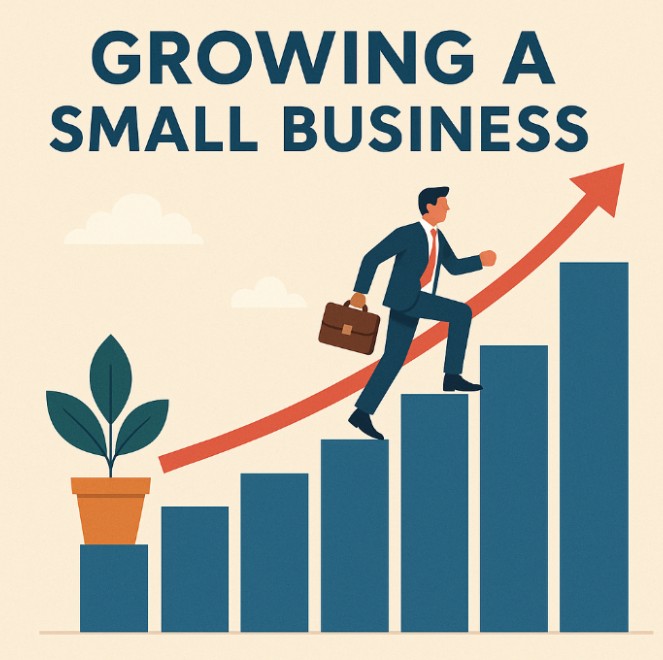
Growing a small business isn’t a smooth, linear path—it typically follows five distinctive stages, each with its unique challenges and opportunities. In their classic 1983 HBR piece, Churchill and Lewis identified these phases as Existence, Survival, Success, Take-Off, and Resource Maturity. Understanding where your business currently stands can help you anticipate needs, dodge pitfalls, and make more strategic decisions.
1. Existence — Getting Off the Ground
What This Stage Looks Like
- You’re launching something new—maybe a service, a product, or even a side hustle.
- Your biggest job is finding customers and fulfilling your first orders.
- You probably handle almost everything yourself, from marketing to delivery to bookkeeping.
Main Challenge:
- Proving your idea works—creating product-market fit. Can you attract paying customers? Can you reliably deliver on your promises?
2. Survival — Staying Afloat
What This Stage Looks Like
- You’ve made some sales. There’s proof your idea resonates.
- Revenue is coming in, but not yet enough to smooth out cash-flow.
- You still wear many hats, and most decisions center around you.
Main Challenge:
- Covering costs while continuing to grow—often with thin margins and inconsistent cash flow.
3. Success — The Crossroads Stage
What This Stage Looks Like
- Your business is profitable and stable. You’re no longer scrambling to survive.
- You’ve reached a fork in the road: do you scale up or become a cash cow where you disengage while maintaining current performance?
Main Challenge:
- Deciding what kind of future you want—and having the capacity to make that choice stick.
4. Take-Off — Scaling Up
What This Stage Looks Like
- You’ve chosen to grow—and now you’re doing it fast. Sales, staffing, and complexity all start rising sharply.
- You need structure to maintain momentum and control.
Main Challenge:
- Managing the growing organizational complexity. How do you create processes without stifling flexibility?
5. Resource Maturity — Becoming Mature and Sustainable
What This Stage Looks Like
- Your business operates with systems rather than heroics. Teams handle roles efficiently. Leadership isn’t trapped in day-to-day details.
- Profitability is more predictable, even if growth has slowed.
Main Challenge:
- Staying innovative and agile while enjoying the comforts of maturity. Avoid rigidity and complacency.
Why This Framework Still Matters Today
Although it was published decades ago, this stage framework—Existence, Survival, Success, Take-Off, and Resource Maturity—remains deeply relevant. It helps business owners:
- Recognize the current phase they’re in (and the typical crisis that accompanies it)
- Anticipate what complexity or decisions are coming next
- Allocate effort, energy, and resources intentionally—rather than reactive firefighting
In your journey as an entrepreneur, understanding these stages can make the difference between flailing and flourishing. Need a space for your budding small business? Feel free to shoot us an email at hello@launchpadcoworkingph.com.